Background
A New Era of Research (2024)
In the spring of 2024, the Lamont Sanctuary Forest entered a new era of research and education through the formal establishment of its campus experimental site for long-term monitoring of soil and forest health. This milestone marked the beginning of a comprehensive initiative aimed at investigating carbon sequestration, ecological health, and climate resilience within a rewilded forest ecosystem.
Research Leadership and Methodology
Spearheaded by Dr. Yushu Xia, alongside Dr. Brendan Buckley, Dr. Ben Bostick, and Dr. Dave Goldberg, this project established a permanent 1-hectare study plot to collect high-resolution data on both aboveground and belowground systems. This initiative expanded the forest's research scope far beyond observational ecology to include soil health assessment, greenhouse gas (GHG) flux monitoring, and allometric tree measurement.
Throughout 2024, the team implemented advanced field sampling techniques to characterize the forest's dynamic soil properties (DSPs), including bulk density, permanganate oxidizable carbon (POXC), and enzyme activities. Simultaneously, allometric data such as tree height, diameter, and species composition were collected to link belowground processes with aboveground biomass. This integrated approach will allow researchers to track changes in ecosystem health and carbon cycling over time.
Scientific Objectives
The project's scientific objectives were threefold:
- Track long-term carbon dynamics by monitoring both aboveground and belowground carbon processes.
- Model spatial and temporal variations in ecosystem processing by leveraging machine learning models, soil health measurements, and sensor data across multiple scales.
- Educate the next generation by preparing students to address environmental challenges through fieldwork, laboratory analysis, geospatial modeling, and high-performance computing.
The establishment of this experimental site reflects a commitment not only to climate and ecological research, but also to hands-on, interdisciplinary education. Today, Lamont Sanctuary Forest stands as a living laboratory for soil scientists, forest ecologists, and students alike.
Historical Context
Originally cleared for agriculture in the 1800s, the land was gradually abandoned in the early 20th century, allowing natural forest regeneration. This transition from agricultural land to mature forest provides valuable insights into ecosystem recovery and carbon sequestration processes.
The forest's diverse hardwood ecosystem, dominated by oak, hickory, maple, and beech trees, serves as a critical research site for understanding forest dynamics, biodiversity, and the impacts of climate change on temperate forest systems.
Soil Carbon Storage and Changes
Soil carbon is one of the most important components of terrestrial ecosystems. Globally, soils store more carbon than the atmosphere and all aboveground vegetation combined—approximately 1,500 petagrams to a depth of one meter, and over 2,400 petagrams to two meters. This makes soil a critical reservoir in the global carbon cycle, and a powerful lever for climate change mitigation. In the Lamont Sanctuary Forest, understanding how carbon is stored and transformed in the soil has become a key focus of research.
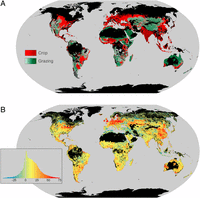
Figure 1: Global distribution of cropping and grazing in 2010 from (A) HYDE v3.2 and (B) modeled SOC change in the top 2 m. Source: Sanderman et al. (2017), PNAS
In 2024, Lamont researchers began a multi-year initiative to monitor changes in soil organic carbon (SOC) across spatial and temporal gradients. The project uses a grid-based soil sampling strategy to collect carbon measurements at 10-20 cm depths, combined with loss-on-ignition tests and spectroscopic models. These samples are taken across varied slope, elevation, and vegetation zones to detect how landscape features influence SOC storage and loss. Digital soil mapping (DSM) tools, coupled with remote sensing data from Sentinel and Landsat satellites, help extrapolate this field data to larger spatial scales.
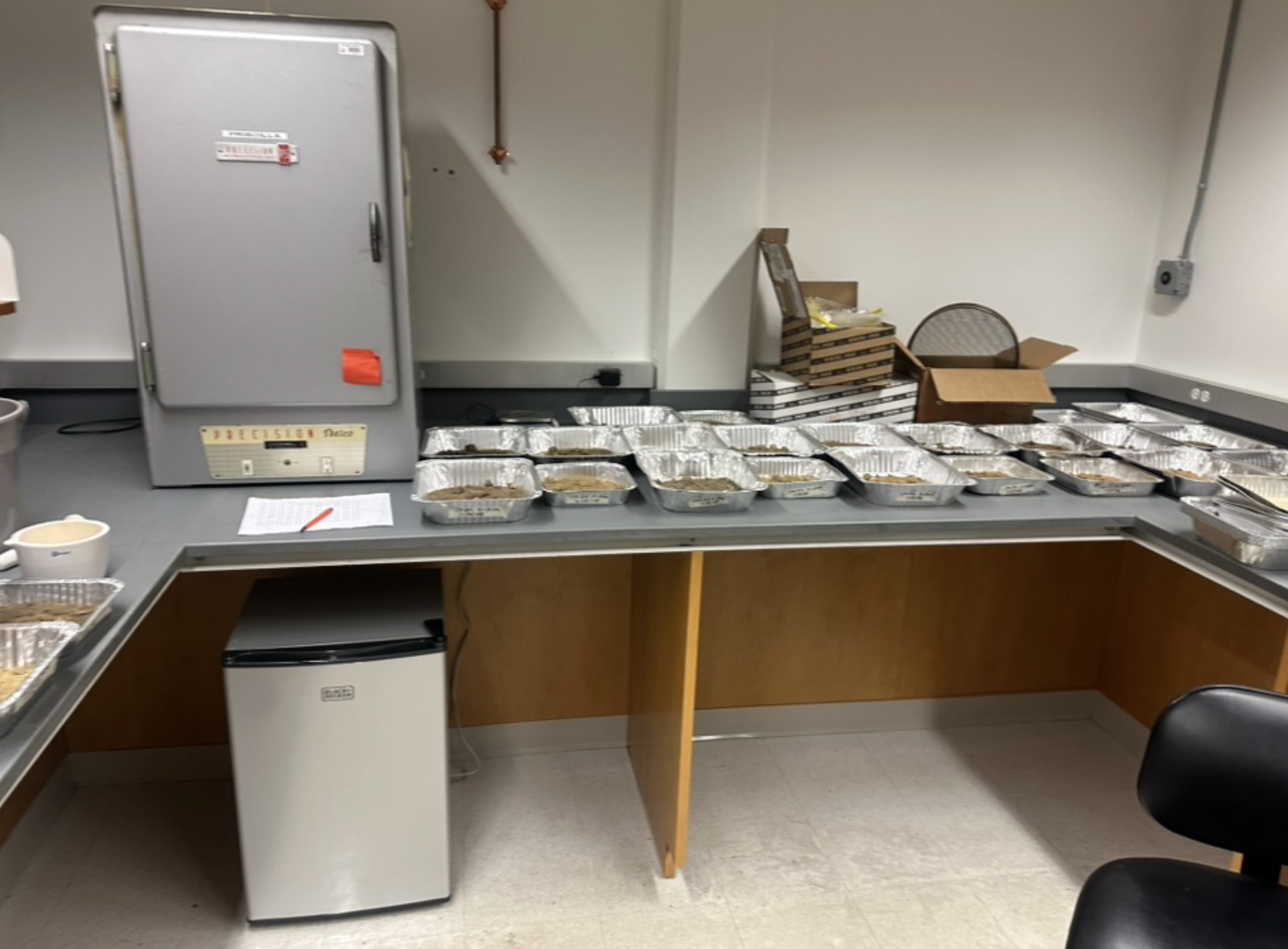
Figure 2: Processing soil samples in the Xia Soil Systems Lab.
This research also supports a broader modeling effort to understand the relationship between soil carbon stocks and dynamic environmental variables like moisture, temperature, and biomass. By comparing measurements over time, researchers aim to detect changes in soil carbon due to reforestation, climate variability, and management practices. The long-term goal is to use these measurements to inform regional carbon accounting and assess the climate benefits of natural forest regeneration.
* Partial support for long-term monitoring systems in the Lamont Sanctuary Forest is provided through the Decarbonation Monitoring Initiative at LDEO.